












BIG NEWS
- SAD Chief Sukhbir Singh Badal Meets Punjab Governor Over Jhota Killing, Demands CM Bhagwant Mann’s Dismissal
- Sonia Gandhi Makes Debut on X, Teases Upcoming Memoir Belonging A Journey of Love
- CM Omar Abdullah has announced Jammu and Kashmir Cabinet Expansion and Reshuffle to Take Place Next Week
- Tragedy Strikes Bihar: Deadly Blast at Illegal Firecracker Factory Leaves Several Feared Dead
- Delhi HC Refuses to Quash Rs 10,000 Peace Bond Notice for AISA Chief Neha Bora
- Karnataka CM DK Shivakumar Meets Poland PM Donald Tusk to Boost Tech and Trade Partnerships
- FIR Filed After 10,470 Irregular Voter Entries Flagged in Uttar Pradesh Assembly Seat
- Cabinet Secretariat Declines Direct Interference in Poll Panel Dispute
- High Court Slams Authorities as Mumbai Smog Surpasses Delhi
- INDIA Bloc Holds Virtual Meet to Finalize November 1 Rally and ‘Vote Chori’ Protests
Revolutionizing Neuroscience: The 2026 Nobel Prize in Medicine


Public Lokpal
October 05, 2026
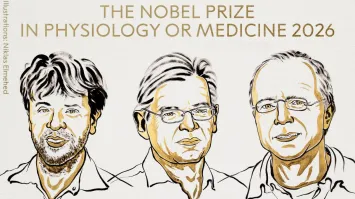
Revolutionizing Neuroscience: The 2026 Nobel Prize in Medicine
The 2026 Nobel Prize in Physiology or Medicine has been awarded to Karl Deisseroth, Peter Hegemann, and Georg Nagel for their pioneering work on channelrhodopsin and optogenetics.
This breakthrough unites optics and genetics, allowing scientists to control neural activity with precision beams of light. Peter Hegemann and Georg Nagel first discovered channelrhodopsin—light-gated ion channels found in green algae that regulate electrical impulses.
Building upon this discovery, Karl Deisseroth successfully engineered these light-sensitive proteins into mammalian neurons.
By enabling researchers to turn specific nerve cells on and off instantaneously, optogenetics transformed neuroscience.
It has dramatically accelerated our understanding of complex brain circuits, mapping how neural networks govern behavior, emotion, and memory.
Beyond basic research, this revolutionary tool is actively paving the way for groundbreaking therapies designed to restore lost vision and treat complex neurological and psychiatric disorders.