


BIG NEWS
- Strict Tech, Multi-Skilling Criteria Eyed for 6-Year Agniveers
- 41 Crore Vanishes in 90 Minutes: Inside the High-Speed Cyber Heist on a Delhi Finance Firm
- Delhi Police Tells Supreme Court Reel-Makers Cannot Claim Press Protections
- Latent July Bug Crashes Over 80% of Microsoft Servers in Global Outage
- Air Chief Marshal Dixit Warns of Loan Sharks, Cyber Espionage Targeting Defence Forces
- Rahul Gandhi, INDIA Bloc Leaders Seek Supreme Court Nod to Question Election Commission Over Nationwide Voter Roll Revision
- Cyclone Akvan Approaches Bay of Bengal After Arnab and Murasu; IMD Issues Alert
- IPL Founder Lalit Modi Acquires British Citizenship, Calls UK His Home
- US Air Travel Disruptions Persist Into Sunday After Historic FAA Outage
- Amitabh Bachchan’s Iconic Bungalow ‘Jalsa’ Caught in Intra-Family Legal Dispute
Revolutionizing Neuroscience: The 2026 Nobel Prize in Medicine


Public Lokpal
October 05, 2026
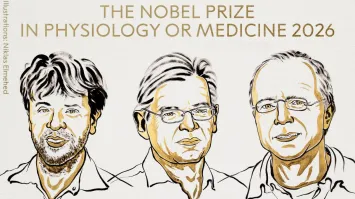
Revolutionizing Neuroscience: The 2026 Nobel Prize in Medicine
The 2026 Nobel Prize in Physiology or Medicine has been awarded to Karl Deisseroth, Peter Hegemann, and Georg Nagel for their pioneering work on channelrhodopsin and optogenetics.
This breakthrough unites optics and genetics, allowing scientists to control neural activity with precision beams of light. Peter Hegemann and Georg Nagel first discovered channelrhodopsin—light-gated ion channels found in green algae that regulate electrical impulses.
Building upon this discovery, Karl Deisseroth successfully engineered these light-sensitive proteins into mammalian neurons.
By enabling researchers to turn specific nerve cells on and off instantaneously, optogenetics transformed neuroscience.
It has dramatically accelerated our understanding of complex brain circuits, mapping how neural networks govern behavior, emotion, and memory.
Beyond basic research, this revolutionary tool is actively paving the way for groundbreaking therapies designed to restore lost vision and treat complex neurological and psychiatric disorders.