









BIG NEWS
- Gauhati HC Bar Association goes on hunger strike, to boycott CJI’s event for new complex
- Jharkhand preparing 10-year vision plan to mitigate man-animal conflicts, restore forests
- Swabhiman Parv: PM Modi leads Shaurya Yatra, offers prayers at Somnath temple
- Biting cold grips Delhi as minimum temperatures dip below 4.1 deg C at isolated places
- Pune civic polls: NCP factions release joint manifesto; Ajit Pawar and Sule share dais
- Forex reserves drop by $9.80 bn to $686.80 bn
- India rejects Lutnick claim on stalled US trade deal, flags concern over Minneapolis shooting
- SIR: Lucknow, Ghaziabad top in delisted voters; fewer deletions in Muslim-dominated pockets
Jharkhand preparing 10-year vision plan to mitigate man-animal conflicts, restore forests


Public Lokpal
January 11, 2026
Jharkhand preparing 10-year vision plan to mitigate man-animal conflicts, restore forests
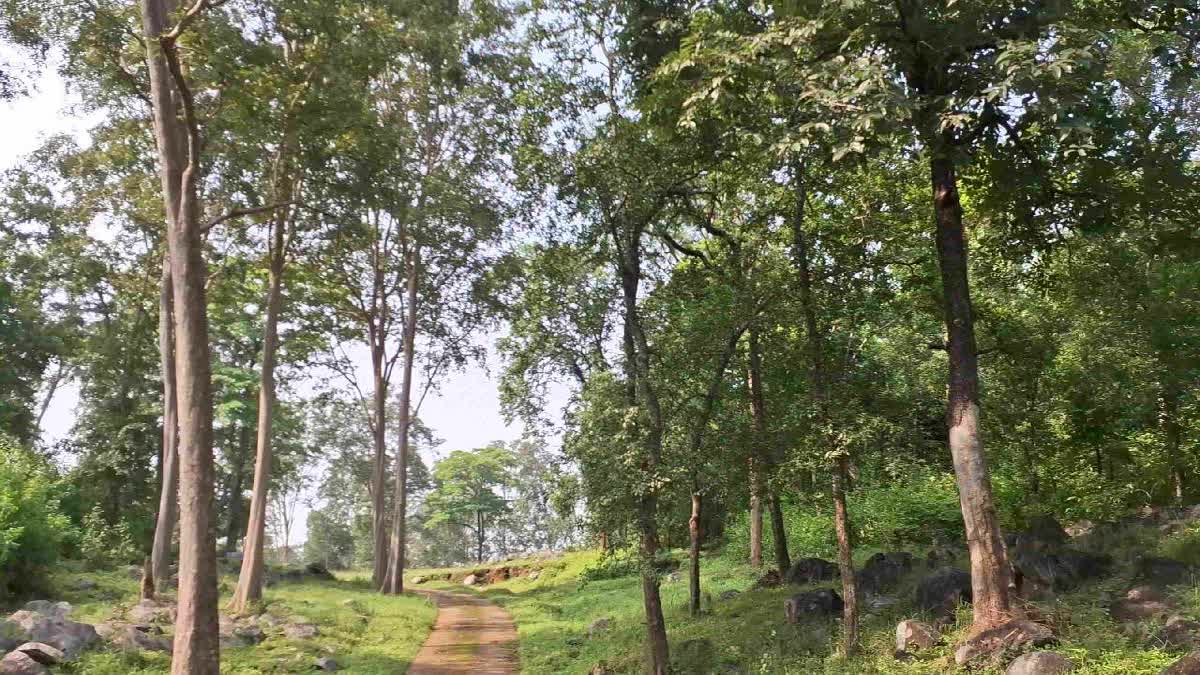
RANCHI: The Jharkhand government is preparing a 10-year vision plan to mitigate man-animal conflicts and restore forests, amid a rise in the number of attacks by elephants, which claimed at least 25 lives in the past one week, officials said on Sunday.
The comprehensive plan, which deals with a 30-point agenda, aims to address such a problem, improve wildlife habitats, regenerate degraded forests, and promote forest-based livelihoods for local communities, they said.
The vision plan also aims at curbing mining-related pollution through large-scale forestation and digitising forest boundaries for better management and protection.
If everything goes as per the plan, the vision document will be finished by March 31 and will be implemented from the next financial year, Jharkhand Principal Chief Conservator of Forests (PCCF) Sanjeev Kumar said.
"We are concerned about the rising conflicts between humans and animals, particularly with elephants in the state. To address this and other issues, we are preparing a 10-year vision plan, which will be finalised by March 31 and implemented in the coming financial year," the PCCF told PTI.
The 'vision plan' seeks to balance ecological conservation with community well-being, offering hope for more harmonious coexistence between humans and wildlife, he said.
"The 10-year vision plan deals with 30 issues such as regenerating forests, creating forest-based livelihood for local communities, protecting and digitising forest boundaries, improving habitats of animals such as tiger, leopard and bear in the state, rehabilitating mined out areas so that pollution impact could be reduced and drafting a micro plan to improve local climate," the official said.
The vision document is being drafted at a time when Jharkhand continues to report loss of life and damage to properties due to human-animal conflicts.
At least 25 people have been killed in elephant attacks in the state since January 1 this year.
A 'rogue' tusker took the lives of 20 people in Jharkhand's West Singhbhum district, another official said.
The department planned to set up a rescue centre for the 'rogue' elephants, like the one that created trouble in Chaibasa.
"For this, we need a land of 5-10 hectares. We are planning to set up the centre in Ranchi, and search for land has already been initiated," he added.
Man-elephant conflicts in Jharkhand have claimed as many as 474 lives over a span of five years since the 2019-20 fiscal, according to a government report.
Former State Wildlife Board member D S Srivastava told PTI, "Habitat fragmentation due to mining, development, and other pressures has pushed elephants and other animals into human settlements more frequently. Their corridors for movement have either been encroached upon or destroyed. With rampant destruction of forests, elephants are also facing a shortage of food, particularly bamboo."
He said man-elephant conflicts are "on the rise, despite a sharp decline in the jumbo population in the state".
Jharkhand's wild elephant population has recorded a drastic decline to 217, far below the 2017 figure of 678, according to the country's first-ever DNA-based census of the species, released in October last year.
The PCCF said fragmentation of elephant routes has been a concern.
"But, we have also observed a change in their food habits, which has become a major reason for conflicts in recent years. The jumbos, which eat Sal leaves, bamboo and 'mahua', are now becoming fond of paddy and potatoes. They are frequently entering farm fields and attacking houses," he said.
Kumar added that all these changes have been observed in the past 25 years.
The forest department is contemplating various aspects to deal with elephants' food behavioural change, he said.
"Convincing farmers in elephant-affected areas to change crops for a certain period could be an option," the PCCF said.
He said that the elephant corridor identification exercise is also underway in the state.
"The exercise will be completed very soon. Thereafter, planning will be made to improve them," Kumar said.
He said that focus on increasing forest cover has also been given in the vision plan.
In Jharkhand, the forest cover grew from 23,721.14 sq km in 2021 to 23,765.78 sq km in 2023, now covering 29.81 per cent of the state's total geographical area, according to the India State of Forest Report (ISFR) 2023.
The report indicates some positive developments in Jharkhand, with very dense forest (VDF) areas increasing by 34.3 sq km.
On the other hand, moderately dense forest (MDF) areas have decreased by 47.92 sq km.
Open forest areas saw a rise of 58.26 sq km since 2021.
PTI