


‘Major progress’ in Iran-US talks as Lebanon de-confliction cell is agreed


Public Lokpal
June 22, 2026
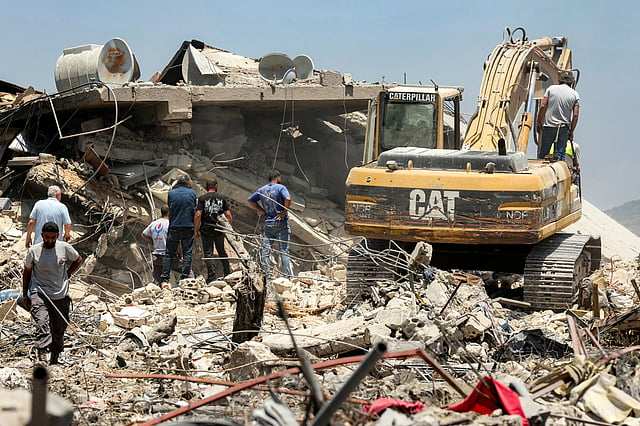
‘Major progress’ in Iran-US talks as Lebanon de-confliction cell is agreed
OBBUERGEN: High-level negotiations in Switzerland seeking a permanent end to the Iran war ended early Monday, with lower-level talks planned for the rest of the week as Iran and the United States agreed to create a “de-confliction cell” to address the fighting in Lebanon.
A statement from mediators Pakistan and Qatar said the cell would include the Lebanese government and would “ensure the adherence of the termination of military operations in Lebanon”.
But it remains unclear whether that will be enough to stop fighting between the Iranian-backed militia Hezbollah and Israel, which occupies Lebanon and insists it must maintain a free hand to attack militants who are launching attacks into northern Israel.
Iran's foreign minister early Monday praised Pakistan and Qatar for their mediation after talks in Switzerland, saying that they “delivered major progress”.
Abbas Araghchi wrote the message on X.
Pakistan, Qatar and Iran all have acknowledged the end of the first round of high-level talks. The US hasn't commented yet.
In his message, Araghchi said the first real test of the understandings reached would be a deconfliction method created over the fighting between Israel and the Iranian-backed militia Hezbollah in Lebanon.
Iran has tied success in the talks to the end of the fighting there. Israel insists it will continue to occupy Lebanese territory and that it must have a free hand to fight Hezbollah, which has launched attacks into northern Israel.
The talks marked the start of a 60-day diplomatic process that seeks to reach a permanent deal to end the Iran war. But the fighting in Lebanon remains one of the key sticking points.
Meanwhile, Iran insisted it had again shut the Strait of Hormuz over the weekend, the narrow mouth of the Persian Gulf crucial to energy shipments, while the US said traffic continued.
Iran first wants to focus on Israeli strikes in Lebanon
Negotiators are in a 60-day sprint to reach an agreement on the technical details that hold massive implications for the world economy and global security.
“The question before us now is how much more can we accomplish together? Can we turn over a new leaf?” Vance said as the talks began, and asked whether they could “change relations in the Middle East permanently.”
The US wants Iran locked into negotiations over its nuclear programme amid concerns it may be used for military purposes, which Iran denies.
Vance also wants Tehran to commit to keeping open the Strait of Hormuz, which Iran on Saturday claimed to close. The US has disputed that, saying shipping traffic continued Sunday.
A renewed ceasefire in Lebanon, brokered on Saturday, appeared to be holding, and Israel's military said it would lift movement restrictions for residents near the border with Lebanon on Monday morning – another sign of calm.
But neither Israel nor Hezbollah is a signatory to the US-Iran deal, and Israeli Prime Minister Benjamin Netanyahu has vowed to keep his forces in southern Lebanon until any threat to Israel is eliminated. Hezbollah has refused to halt attacks unless Israel commits to withdrawing.
AFP