.jpeg)
.jpeg)




Secretly recorded phone call by spouse can be used as evidence in divorce cases, says SC


Public Lokpal
July 14, 2025
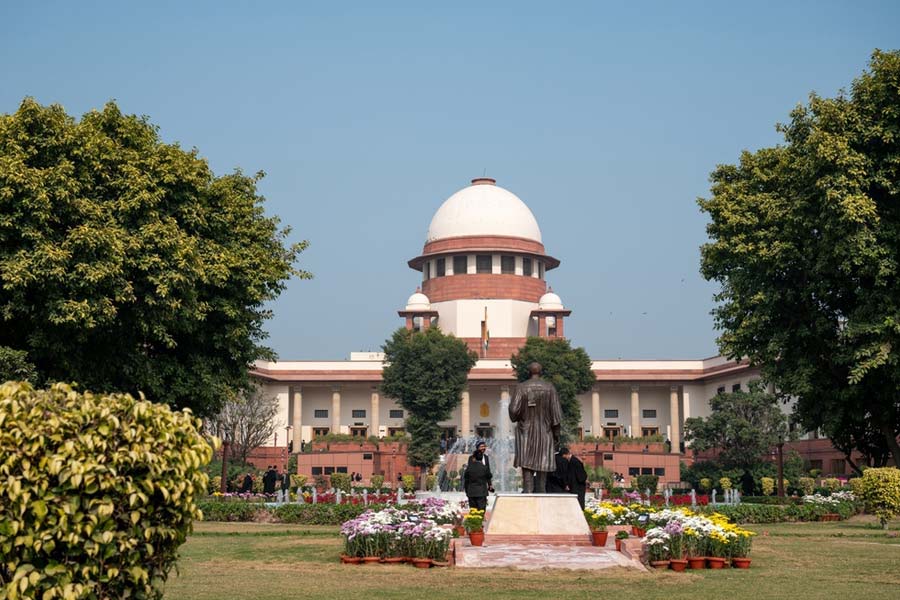
Secretly recorded phone call by spouse can be used as evidence in divorce cases, says SC
New Delhi : The Supreme Court on Monday held that secretly recorded conversations of spouses are admissible as evidence in matrimonial cases, saying the fact that spouses are snooping on each other is proof the marriage is not going strong and hence can be used in judicial proceedings.
A bench comprising Justice B V Nagarathna and Satish Chandra Sharma set aside a verdict of the Punjab and Haryana High Court in a case. The high court had held that the secret conversations between spouses are protected under Section 122 of the Evidence Act and cannot be used in judicial proceedings.
Setting aside the high court order, the bench restored the trial court order and said recorded conversations can be taken note of during the matrimonial proceedings.
It asked the family court to proceed with the case after taking judicial note of the recorded conversations.
The apex court said the fact that spouses are recording the conversations of each other is a proof in itself that their marriage is not going strong and hence can be used in the judicial proceedings.
Section 122 deals with communication during marriage and says that “no person who is or has been married, shall be compelled to disclose any communication made to him during marriage by any person to whom he is or has been married”.
The case stems from a Family Court decision in Bathinda that allowed the husband to rely on a compact disc containing recordings of phone calls with his wife to support claims of cruelty. The wife challenged this in the high court, arguing that the recordings were made without her knowledge or consent and violated her fundamental right to privacy.
The high court accepted the wife’s plea and ruled the evidence inadmissible, stating that surreptitious recording amounted to a clear breach of privacy and was legally unjustified.
However, Justice Nagarathna disagreed with this position.
“Some arguments have been made that permitting such evidence would jeopardise domestic harmony and matrimonial relationships as it would encourage snooping on the spouses, therefore infringing the objective of Section 122 of the Evidence Act.
"We don't think such an argument is tenable. If the marriage has reached a stage where spouses are actively snooping on each other, that is in itself a symptom of a broken relationship and denotes a lack of trust between them," she said.
The detailed judgement is awaited.
PTI



.jpeg)





.jpeg)