


.jpeg)



BIG NEWS
- Bengal chief electoral officer Manoj Agarwal to be chief secretary in CM Suvendu Adhikari's BJP govt
- Agniveers not same as regular soldiers, can’t claim same benefits on death, Centre tells court
- Bengal govt okays land transfer to BSF for fencing border with B'desh: CM after 1st cabinet meeting
- TN CM Vijay meets predecessor Stalin in courtesy call following first Assembly session
- Vinesh reaches Gonda, insists she is eligible to compete; WFI says her reply incomplete
- TVK's Joseph Vijay sworn in as Tamil Nadu chief minister, shares stage with Rahul Gandhi
- Karnataka planning minister D Sudhakar dies after prolonged illness
- PMJJBY, PMSBY settle claims worth Rs 25,160 cr since their launch in 2015
- Suvendu Adhikari takes oath as first BJP CM of West Bengal
- Donald Trump releases dozens of previously classified UFO files, sparks fresh alien debate
Agniveers not same as regular soldiers, can’t claim same benefits on death, Centre tells court


Public Lokpal
May 11, 2026
Agniveers not same as regular soldiers, can’t claim same benefits on death, Centre tells court
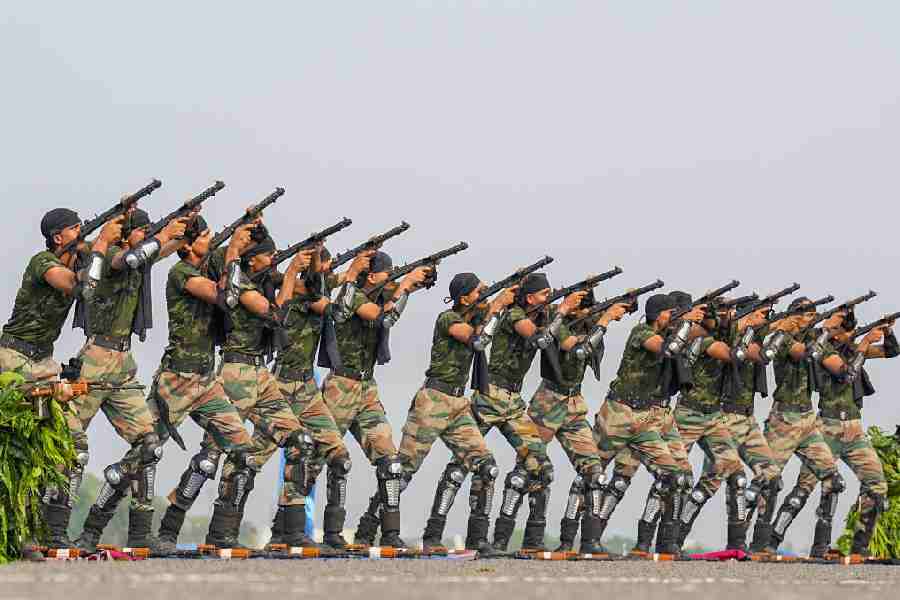
New Delhi: Agniveers cannot claim parity with regular soldiers in pension benefits for their next of kin in the event of death in action, the Centre has informed Bombay High Court in an affidavit filed last week against a petition by the mother of a deceased Agniveer.
Murali Naik was killed on May 9 last year in Jammu and Kashmir’s Poonch when the Pakistan Army resorted to heavy cross-border artillery and mortar attacks as India launched Operation Sindoor in retaliation against the Pahalgam terrorist attack that killed 26 people in April last year.
The petition by his mother, Jyotibai Naik, argued that Agniveers perform the same duties and face the same risks as regular soldiers, yet the families of those recruited under the short-term induction programme are denied long-term pension and other welfare benefits.
The petition, filed last year through advocates Sandesh More, Hemant Ghadigaonkar and Hitendra Gandh, stated that the Centre's Agnipath scheme creates an "arbitrary" distinction between Agniveers and regular soldiers, and questioned the "discriminatory" denial of full death benefits to the family.
The government, in its affidavit clarified that Agniveers are not “similarly situated” as regular soldiers and said that while they are engaged for a fixed four-year period, pensionary benefits and other emoluments in the armed forces are linked to long-term service.
"There can be no parity between two differently placed classes of persons. The classification and differentiation have a rational nexus with the objectives of the Agnipath scheme and are therefore, constitutionally valid under Article 14 of the Constitution of India," the government said in its affidavit.
It further stated that while the Army Act provides the historical and legal foundation for the military, the Agnipath policy is a contemporary legislative and executive evolution designed for present-day national security needs.
The affidavit said that having accepted the terms of engagement of the scheme, the deceased Agniveer's mother cannot now seek to retrospectively apply the service benefits of a regular soldier to the Agniveer category.
It pointed out that the classification between Agniveers and regular soldiers is based on intelligible differentia, including tenure of service, nature of engagement and conditions of recruitment.
The Centre's decision to recruit persons for the armed forces through a new Agnipath Scheme constitutes a policy decision taken for national security reasons, it said.
The government sought dismissal of the petition, noting that judicial reviews in such policy decisions relating to the integrity and security of the nation were limited.
It said that the petitioner was under an "erroneous assumption" that Agniveers are entitled to the same pensionary benefits as regular soldiers.
There is no provision for the grant of family pension to the next of kin of a deceased Agniveer in the Agnipath Scheme, the affidavit said.
The government argued that the Agnipath scheme was aimed at maintaining a "youthful, agile and technologically" advanced armed forces, and the constitutional validity of the scheme has already been upheld by the Delhi High Court and then the Supreme Court.
Considering the peculiar border situation, the incessant threats and attempts to infiltrate the borders by hostile neighbouring countries, India needs a unique force that can handle such hostility, infiltrations, proxy-war and aggressions to keep the borders safe, the affidavit said.
It added that Murali Naik was declared a battle casualty and killed in action and that the term "martyred" is not used in the armed forces.
The affidavit said the last rites of the petitioner's son were performed with full military honours, and she had received a "heartfelt" condolence letter from the commanding officer of the regiment as would have been done for regular soldiers.
"All admissible financial and terminal benefits under the Agnipath scheme have been duly disbursed to the petitioner. The total compensation amounts to approximately Rs 2.3 crore, which includes insurance cover and compensation," it stated.
Hence, there has been no violation of the fundamental rights of the petitioner, it added.
The plea will be heard on June 18.
PTI
NEWS YOU CAN USE
.jpeg)